
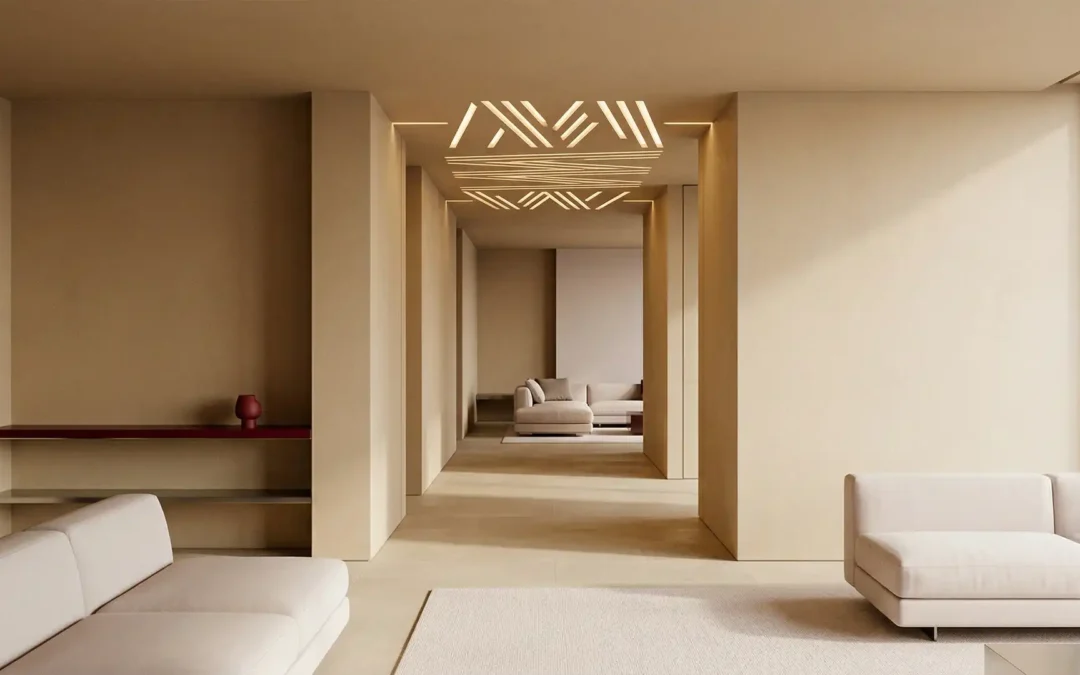
Consistency in design is often misunderstood as repetition.
It is not.
Consistency is alignment.
Alignment of intent, material, color, proportion, and experience.
A well-designed space does not feel assembled.
It feels resolved.
The Problem with Fragmented Design Thinking
Many buildings suffer from a silent issue.
Not structural.
Not functional.
But conceptual.
Each space is treated as an isolated opportunity rather than a component of a unified system.
A living room follows one language.
A corridor introduces another.
A bedroom shifts again.
Individually, each space may appear acceptable.
Collectively, they collapse.
This fragmentation creates visual noise.
It disrupts flow.
It weakens identity.
Design Is Not Room-Based. It Is System-Based.
A building is not a collection of rooms.
It is a continuous spatial narrative.
Consistency ensures that this narrative is readable.
Without it, the user experiences discontinuity at every transition.
This is where many projects fail.
They optimize for moments.
They neglect continuity.
A strong design is not defined by how a space looks.
It is defined by how all spaces relate.
Color Is Not Decoration. It Is Structure.
One of the most common forms of inconsistency appears in color usage.
Different palettes applied across spaces without a governing logic.
Color should not change randomly.
It should evolve within a controlled system.
A consistent palette does not limit creativity.
It creates discipline.
This discipline allows variation without chaos.
Contrast without conflict.
Expression without fragmentation.
Material Consistency Defines Perceived Quality
Materials carry weight.
Not only physically, but perceptually.
When materials shift unpredictably between spaces, the environment loses credibility.
It begins to feel temporary.
Unresolved.
Consistency in material selection does not mean uniformity.
It means coherence.
Textures, finishes, and transitions must follow a logic that can be understood, even if not consciously recognized.
Spatial Flow Is a Designed Experience
Movement through a building is not accidental.
It is designed.
Consistency allows the user to navigate space without friction.
Transitions feel natural.
Proportions feel expected.
Inconsistent design interrupts this flow.
Each threshold becomes a reset point.
Each room demands re-interpretation.
This is not complexity.
It is inefficiency.
Consistency Builds Identity
In commercial environments, consistency becomes even more critical.
A space is not only experienced.
It represents something.
When design language shifts across areas, the identity becomes diluted.
There is no clear message.
No recognizable system.
Consistency transforms a space into a brand.
It ensures that every corner reflects the same intention.
The same level of clarity.
The same standard.
Conclusion
Consistency is not a constraint.
It is a framework.
It allows design to move from isolated decisions to structured systems.
From decoration to intention.
A building should not feel like a sequence of ideas.
It should feel like one.
This is where design shifts from visual composition to spatial intelligence.
This is our discipline.
Continued perspectives
This discussion continues through our LinkedIn presence.
Selected insights, case perspectives, and system thinking are published continuously.
Visit MoeBak on LinkedIn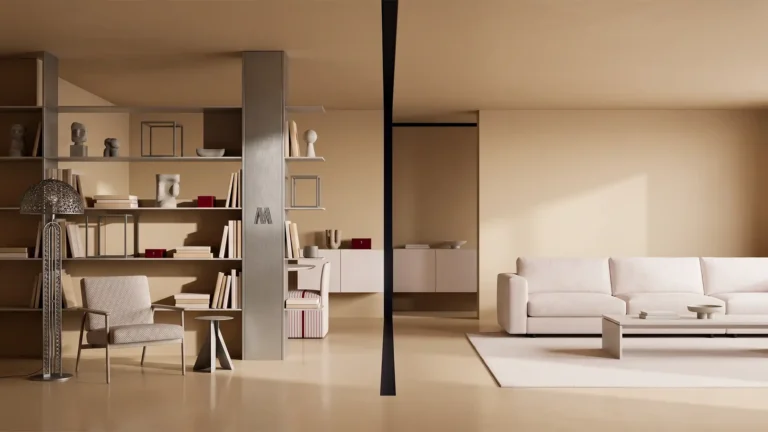
Continued thinking
Ideas evolve through systems.
We continue them beyond individual posts.
Selected insights, case perspectives, and structured thinking continue across MoeBak’s broader publication rhythm.